Power Your World
With Solar Energy
On-Grid · Off-Grid · Hybrid — Hyderabad-Proven.
Whether you want to slash your electricity bills, achieve complete energy independence, or get the best of both worlds — we provide premium, long-lasting solar solutions for your home or business.
5,000+
Systems Installed
25 YR
Panel Warranty
MNRE ✓
Approved Partner
5,000+
Systems Installed
10 MW+
Capacity Deployed
₹12Cr+
Customer Savings
25 Years
Panel Warranty
MNRE & DISCOM
Approved
THREE SYSTEMS.
ONE RIGHT FOR YOU.
Each solar system type serves a different need. Explore all three and find your perfect match.
— SYSTEM TYPE 01
ON-GRID SOLAR SYSTEM
GRID-CONNECTED • NET METERING • ZERO BACKUP
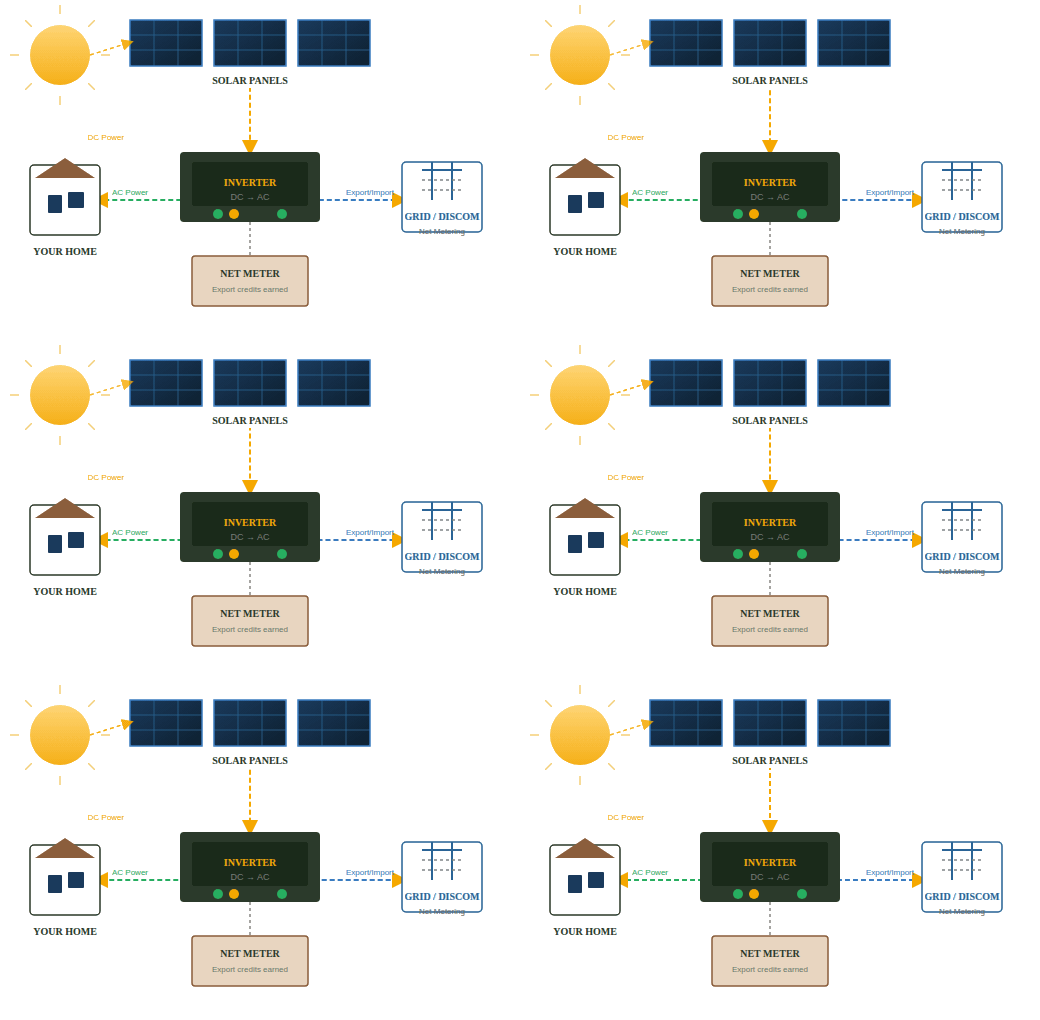
An On-Grid (or Grid-Tied) solar system is directly connected to the public electricity grid (DISCOM). Solar panels generate DC power, which an inverter converts to AC power for your home. When you generate more than you consume, the surplus is exported to the grid — and you earn credits on your electricity bill. When generation is low (nights, cloudy days), you draw power from the grid as usual.
HOW IT WORKS
- 1 Solar panels capture sunlight and generate DC (direct current) electricity.
- 2 The on-grid inverter converts DC to AC power for household use.
- 3 Your home uses solar power first; surplus flows to the grid via Net Meter.
- 4 DISCOM records exported units and credits them to your electricity bill.
- 5 At night or cloudy days, grid power is consumed as usual — seamlessly.
✓ ADVANTAGES
- Lowest upfront cost
- Earn via Net Metering credits
- No battery maintenance
- Simple, reliable setup
- Fastest ROI (3–5 yrs)
⊘ LIMITATIONS
- No power during grid outages
- Requires stable grid connection
- No backup power storage
Ideal For / Best For: Urban homes, offices with stable grid, areas with good Net Metering policies (Telangana, AP), those wanting fastest ROI with minimal investment.
— SYSTEM TYPE 02
OFF-GRID SOLAR SYSTEM
BATTERY-POWERED • GRID-INDEPENDENT • 24/7 SUPPLY
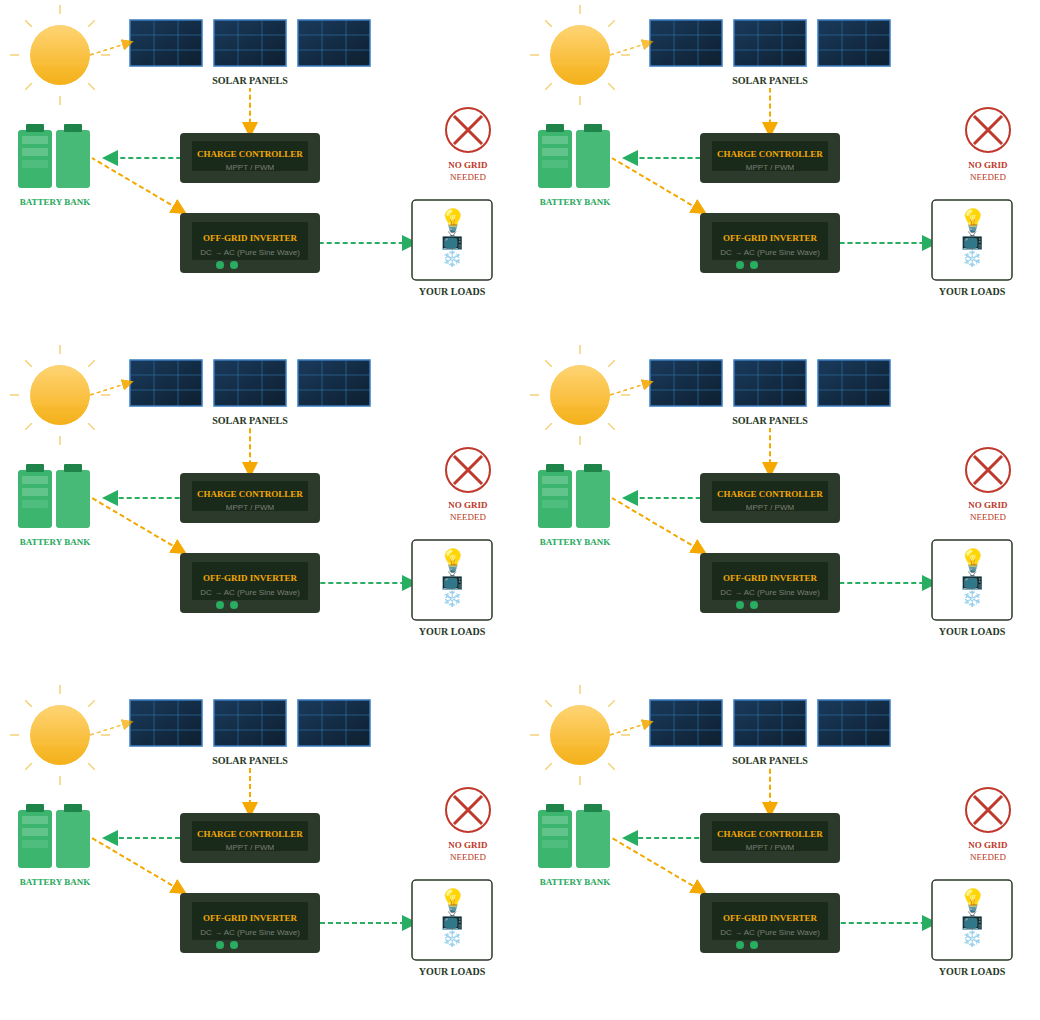
An Off-Grid solar system is completely independent of the public electricity grid. Solar panels charge a battery bank via a charge controller, and an off-grid inverter converts stored battery power to AC for your loads — day and night. This is the solution for remote locations, farms, and anyone who wants complete energy independence regardless of grid availability.
HOW IT WORKS
- 1 Solar panels generate DC electricity from sunlight.
- 2 A charge controller (MPPT/PWM) regulates current and charges the battery bank.
- 3 Battery bank stores energy for use at night or during cloudy days.
- 4 Off-grid inverter converts DC battery power to AC for all your appliances.
- 5 No grid connection required — fully self-sufficient energy supply.
✓ ADVANTAGES
- Complete grid independence
- Works in remote locations
- Zero electricity bills
- Backup for 1-3 days
- No Net Metering needed
⊘ LIMITATIONS
- Higher upfront cost (batteries)
- Battery replacement every 5-8 yrs
- Cannot export to grid
- System size must be carefully planned
Ideal For / Best For: Remote farms, agricultural pumps, villages without reliable grid supply, telecom towers, remote resorts, and anyone wanting 100% energy independence..
— SYSTEM TYPE 03
HYBRID SOLAR SYSTEM
BEST OF BOTH • BATTERY + GRID • MAXIMUM SAVINGS
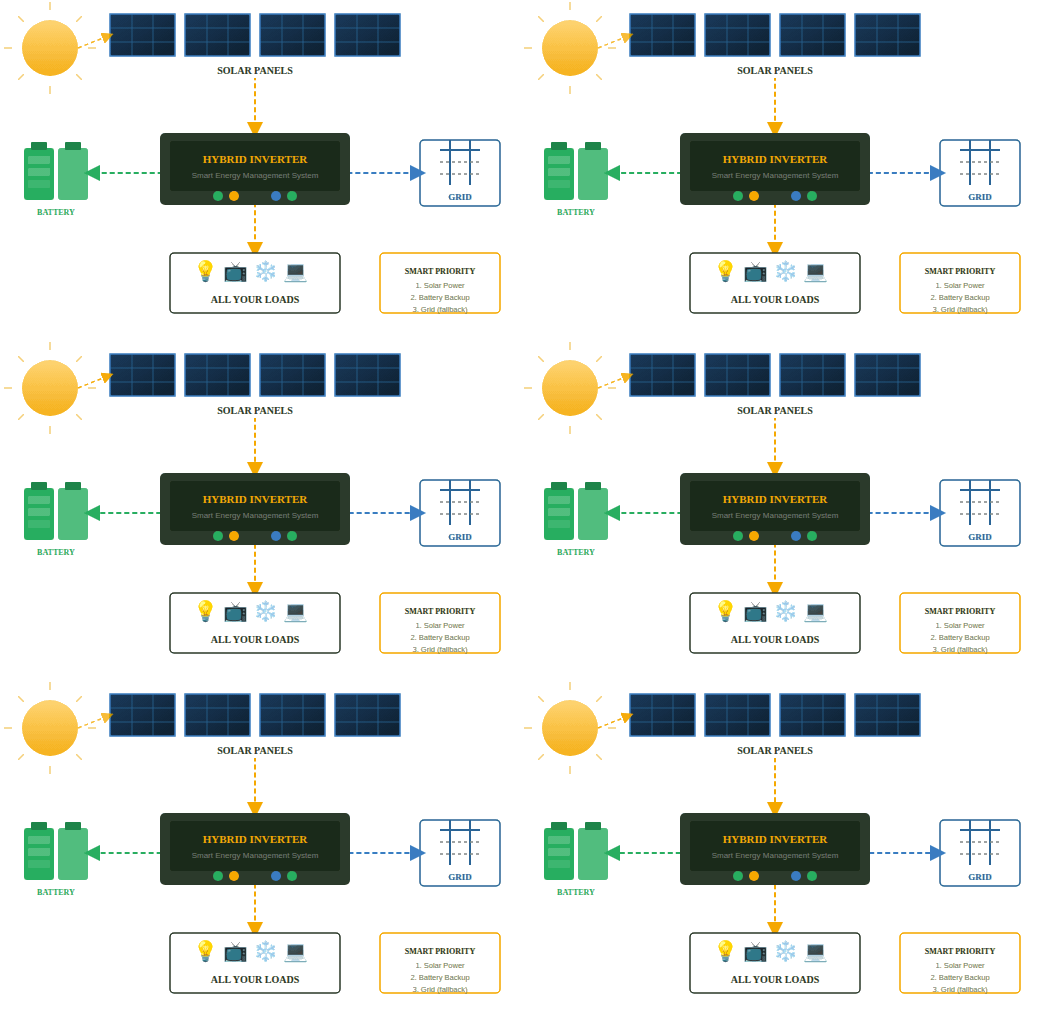
A Hybrid solar system combines the best of On Grid and Off Grid systems. It connects to the grid for Net Metering benefits while also storing excess energy in batteries for backup. A smart hybrid inverter intelligently manages energy flow — prioritising solar power, storing surplus in batteries, and using grid power only as a last resort. This is the premium solution for maximum savings and reliability.
HOW IT WORKS
- 1 Solar panels generate DC power that feeds the hybrid inverter.
- 2 Hybrid inverter intelligently routes: loads first, then charge battery, then export to grid.
- 3 Stored battery power supplies your home during night or power cuts.
- 4 Excess exported to grid earns Net Metering credits on your bill.
- 5 Grid acts as final backup — you're always protected, no matter what.
✓ ADVANTAGES
- Backup power during outages
- Earns Net Metering credits
- Smart energy management
- Maximum self-consumption
- Future-proof expandable system
⊘ LIMITATIONS
- Highest upfront investment
- Battery replacement cost
- More complex installation
Ideal For / Best For: Homes with frequent power cuts, businesses needing 24/7 reliability, high-end residences wanting maximum ROI, areas with expensive grid power or unreliable supply.
Which System Is Right
For You?
Compare our three solar solutions to find the perfect match for your energy needs.
| Parameter | ⚡ ON-GRID | 🔋 OFF-GRID | ☀️ HYBRID |
|---|---|---|---|
| Grid Connection | Required | Not Needed | Optional |
| Battery Storage | ✕ None | ✓ Required | ✓ Required |
| Power During Outage | ✕ No | ✓ Yes | ✓ Yes |
| Net Metering / Export | ✓ Yes | ✕ No | ✓ Yes |
| Upfront Cost | ✓ Low | • Medium–High | High |
| ROI / Payback Period | 3–5 Years | 6–8 Years | 4–6 Years |
| Electricity Bill | Reduced by 70–90% | Zero | Near Zero |
| Remote Location | ✕ No | ✓ Yes | • With battery |
| Maintenance | Minimal | Battery care needed | Battery care needed |
| Scalability | ✓ Easy | • Moderate | ✓ High |
| Subsidy Benefit | ✓ Available | • Limited | ✓ Available |
| Best For | Urban homes with stable grid | Remote areas, farms | Premium homes, power cuts |
From Sunlight To
Savings — In 5 Steps
No matter which system you choose, solar energy follows the same fundamental path from the sun to your socket.
Solar panels (photovoltaic cells) absorb sunlight and convert it directly into DC electricity through the photovoltaic effect.
The inverter converts DC power from panels (or batteries) into AC power — the standard form of electricity used in your home.
AC power flows through your distribution board to power lights, fans, ACs, appliances — all your regular electrical loads.
Excess energy is stored in batteries (Off-Grid/Hybrid) or exported to the grid (On-Grid/Hybrid) via a Net Meter for credits.
Your electricity meter runs backward (Net Metering) or you use stored battery power — resulting in dramatically lower bills.
Every Rupee You Spend
On Solar Comes Back — Multiplied
Massive Bill Savings
Reduce electricity bills by 70–95%. A 5 kW system in Hyderabad saves ₹60,000–₹80,000 annually.
Government Subsidies
Avail up to 40% central subsidy on residential solar systems under the PM Surya Ghar scheme.
Carbon Footprint Zero
A 5 kW system offsets 6–7 tonnes of CO₂ per year — equivalent to planting 300 trees.
Property Value Boost
Solar installations increase property resale value by 3–5% and command a premium market price.
Energy Independence
Reduce dependence on rising grid tariffs and enjoy power even during DISCOM outages.
25-Year Performance
Tier-1 panels carry 25-year performance warranties with almost zero maintenance needed.
Fast Installation
Most residential systems are designed, approved, and installed within 7–14 days.
Smart Monitoring
Track live generation, consumption, and savings from anywhere via our mobile app.
Frequently Asked Questions
For most Hyderabad homes with a stable TS/APCPDCL / APNPDCL connection, an On-Grid system is the best choice—lowest cost, fast ROI (3–5 years), and you earn Net Metering credits. If you experience frequent power cuts (2-3 hrs/day), a Hybrid system with battery backup is worth the extra investment. Off-Grid is ideal only if you're in a remote area without grid access.
System size depends on your monthly electricity consumption. As a thumb rule: divide your monthly units (kWh) by 120. For example, if your bill shows 400 units/month, you need a ~3.3 kW system. Most Hyderabad homes need 3 - 7 kW. Our team will do a free detailed site assessment and recommend the exact size for maximum ROI.
With an On-Grid or Hybrid system, your bill will still arrive but it will be drastically reduced—typically 70-100% lower. With Net Metering, excess units are credited, and you only pay for units consumed beyond what you generated. In sunny months with good sunlight and moderate usage, your bill can be near zero or even show a credit balance.
Net Metering is a billing mechanism where your electricity meter tracks both consumption from the grid and export of surplus solar power. When your panels produce more than you use, excess flow to the grid and are credited on your next bill at an approved per-unit rate (currently ~Rs. 4-5 in Telangana and AP). This means your effective electricity cost becomes very low — or even zero in sunny months.
No. For safety reasons, On-Grid systems automatically shut down during grid outages (this is a mandatory anti-islanding protection feature). If you want power during outages, you need a Hybrid system with battery backup. LavishRays offers Hybrid systems with 4-12 hours of battery backup depending on your requirement and budget.
Under the PM Surya Ghar: Muft Bijli Yojana, residential customers can avail a central government subsidy of up to 40% for systems up to 3 kW and 20% for the next 3-10 kW part. This is directly credited to your bank account. Additional state incentives may apply in Telangana and AP. LavishRays handles the entire MNRE portal registration and subsidy application process for our customers at no extra charge.
A typical residential rooftop solar installation takes 1–3 days of physical installation work. However, the full process including site survey, design, DISCOM approval, installation, net-metering application, and commissioning takes 2-4 weeks. LavishRays manages the entire end-to-end process and you don’t have to deal with any paperwork or approvals.
Ready to Switch to
Solar Power?
Get a free site visit and personalised proposal for the right solar system for your home or business. Our solar experts across Hyderabad, Vijayawada, and Warangal are ready to help — within 24 hours.